The Strange Case of the $800 Publication
What a four-page publication from 1845 can teach B2B SaaS about being worth reading.
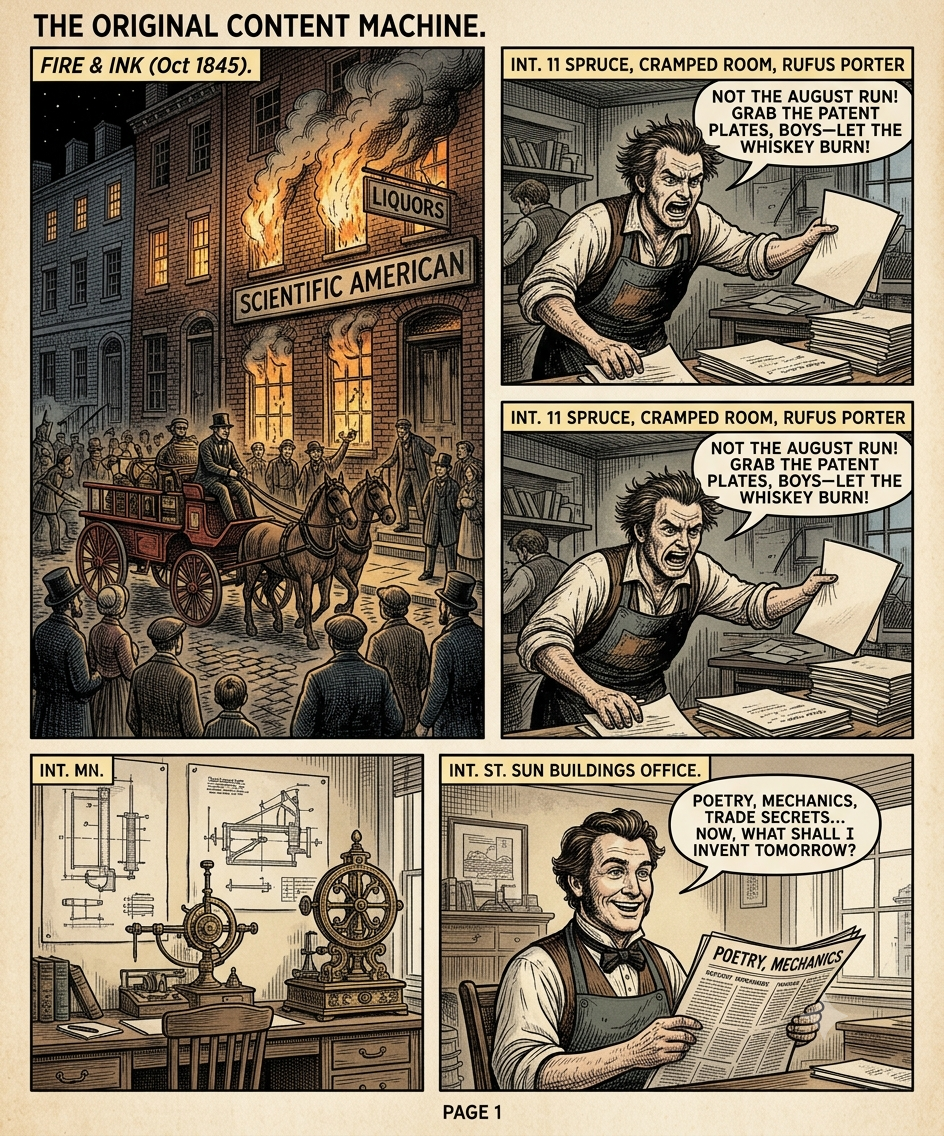
The fire began in the cellar of 11 Spruce Street on October 20, 1845. There was little in the building to suggest that anything of lasting importance was being made there. The office itself was hardly impressive, a room remembered as roughly seven feet by nine, tucked into a building that also housed light manufacturing and, rather unfortunately, a large quantity of liquor.
Somewhere in that building was a new publication that had been running for less than two months. Its name was Scientific American.
The first issue appeared on August 28, a four-page weekly promising reports on new inventions, patents, mechanical improvements and scientific ideas. There were also essays, practical information about arts and trades, experiments, miscellaneous news, music and poetry. It was a curious assortment, but perhaps that was to be expected from its founder, Rufus Porter, an inventor and publisher whose interests rarely stayed in one place for very long.
Then came the fire.
Publication was interrupted for four weeks. By December, the paper had moved from Spruce Street to the Sun Buildings on Fulton Street, and it carried on.
Porter, however, would not be there for long.
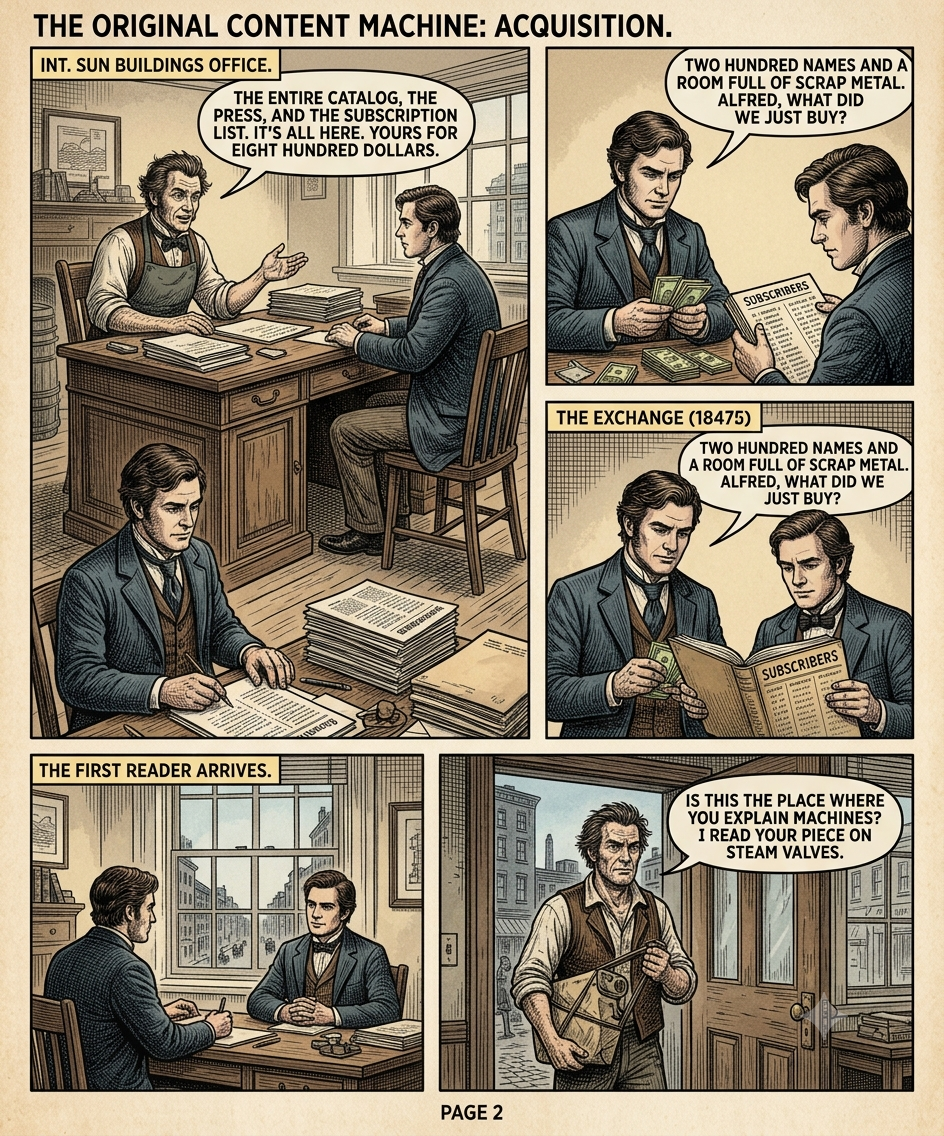
About ten months after launching the paper, he sold Scientific American to Orson Munn and Alfred Beach for $800. What they acquired was hardly the sort of thing that would attract attention today: a small publication, some old types and printing materials, and a subscription list of about two hundred names.
The two young publishers might reasonably have wondered what, exactly, they had bought.
Their readers soon gave them an answer.
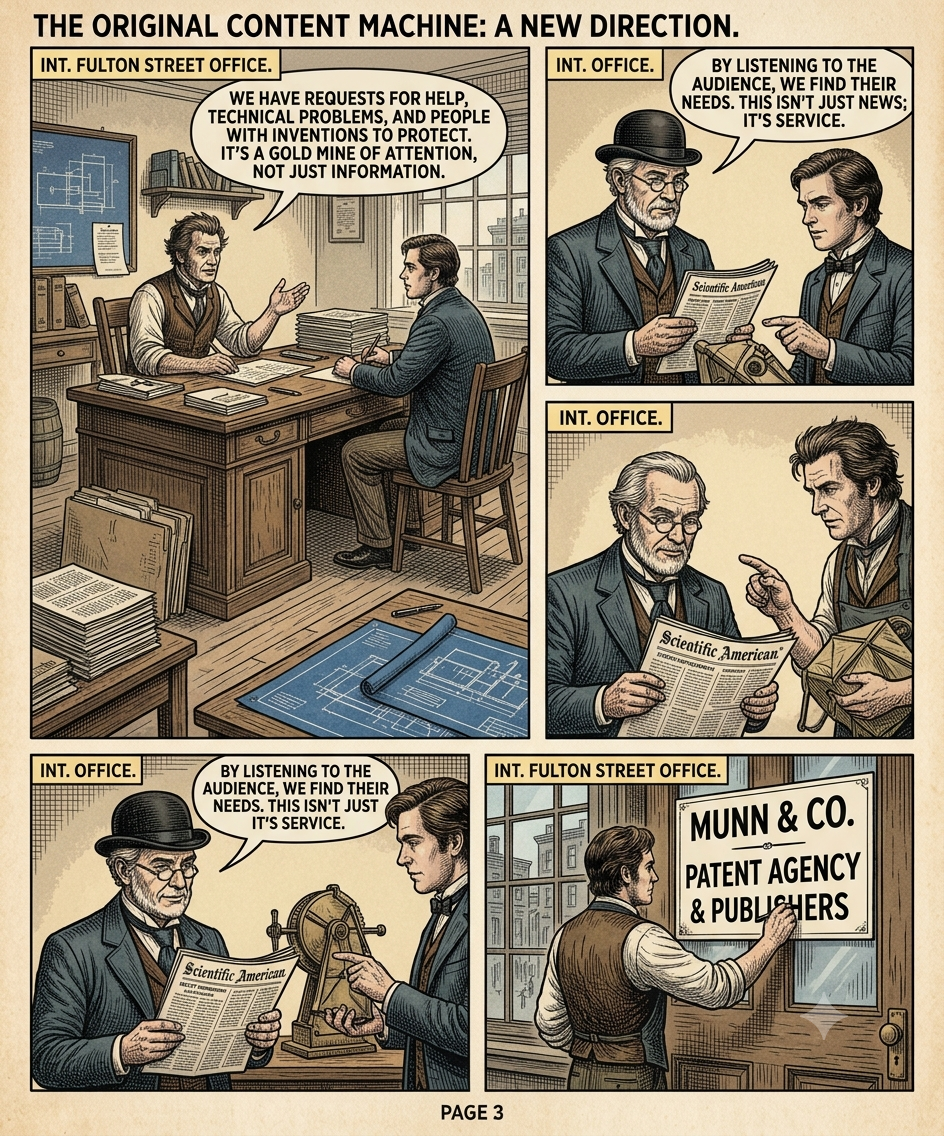
Inventors began writing to Munn and Beach. Some simply turned up at their offices. They were looking for help with patents, and the requests came often enough for the publishers to recognise that the publication had done something more valuable than sell a few subscriptions. It had put them in contact with a very particular group of people, people who had inventions to protect and problems they were willing to pay someone to solve.
In 1846, Munn & Co. established a patent agency in connection with the publication.
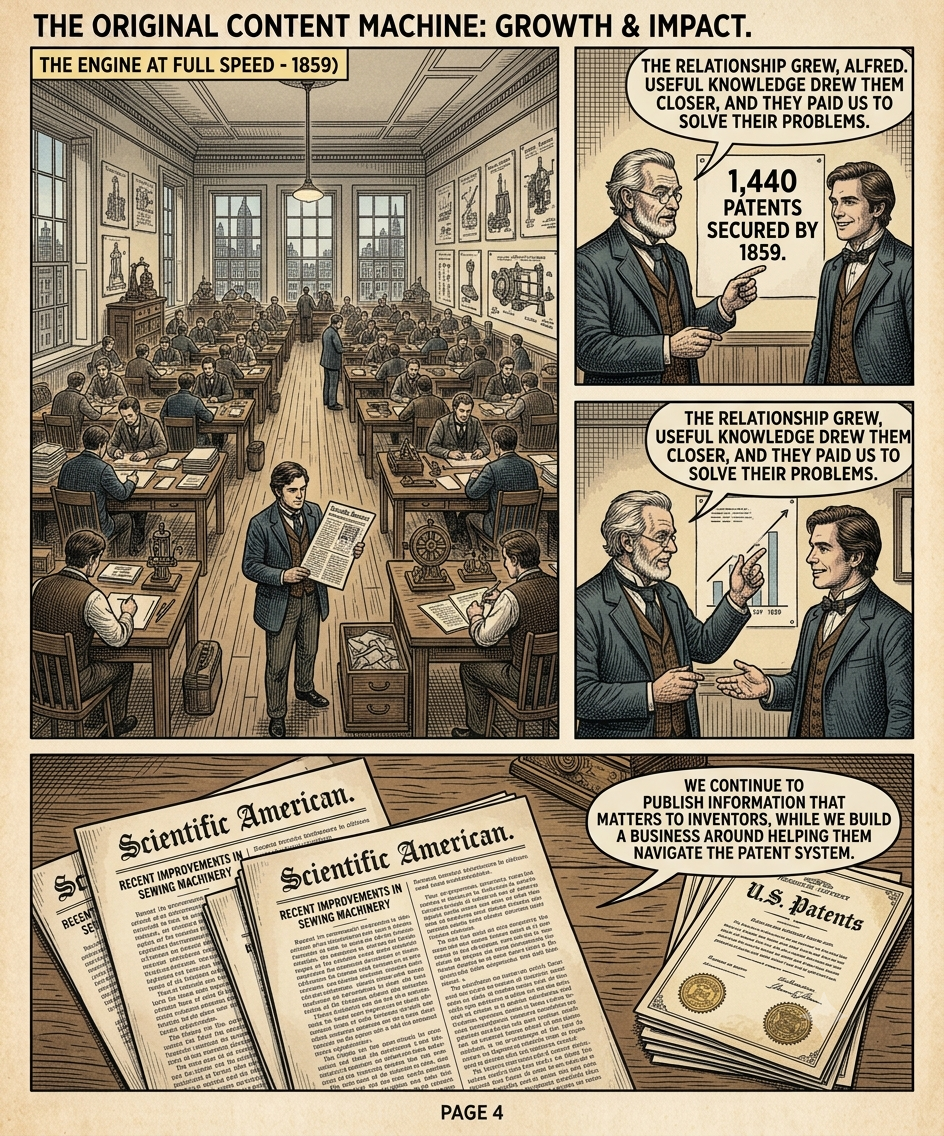
The relationship grew. Scientific American continued to publish information that mattered to inventors, while its owners built a business around helping those same inventors navigate the patent system. By 1859, the Scientific American Patent Agency had secured 1,440 patents for clients.
This is where a story from 1845 begins to feel strangely familiar.
Today, B2B SaaS companies have a much more elaborate vocabulary for this: content marketing, thought leadership, owned media, newsletters, audience building.
The channels have changed, but the underlying idea has not.
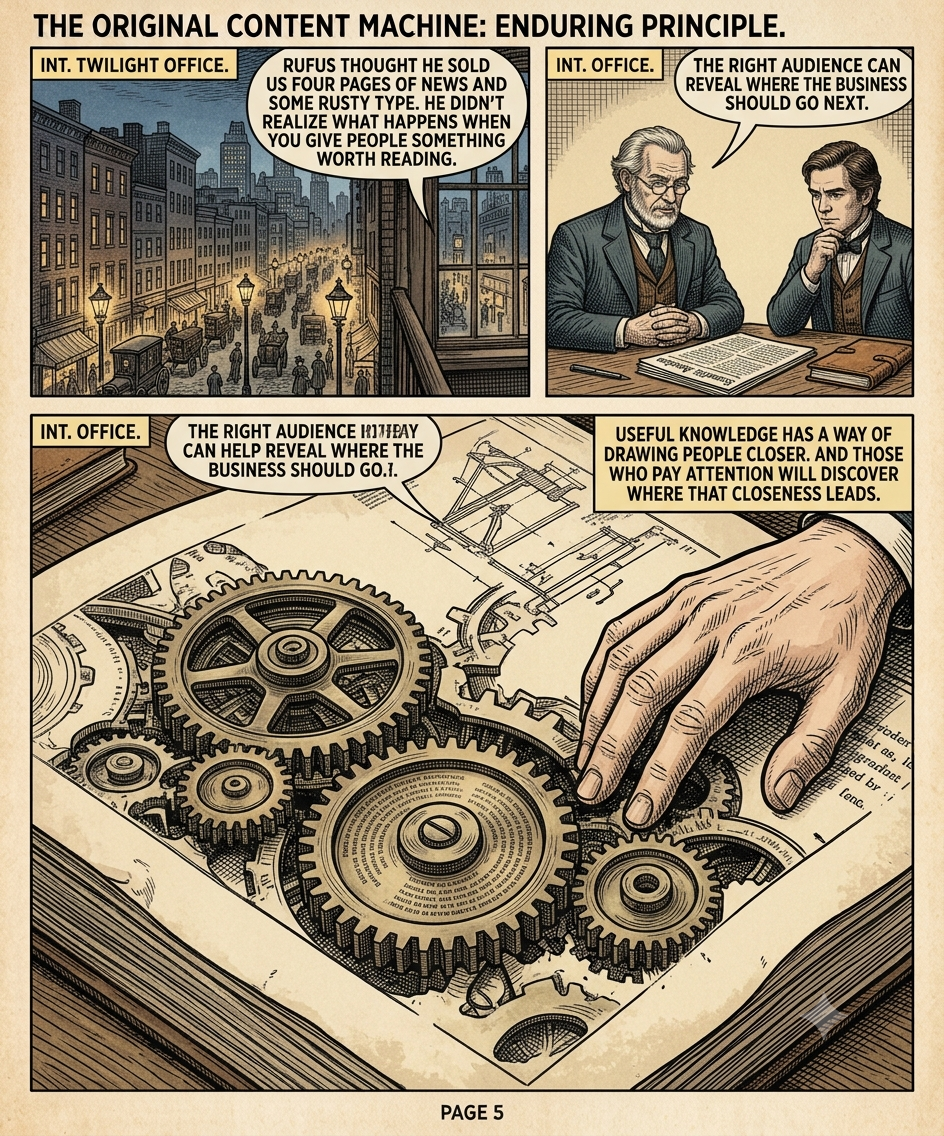
A publication finds a specialised audience. It becomes useful to them. By listening closely enough, its publishers discover what else that audience needs.
Today, content is often treated as a way to attract the right people to a business, but Scientific American suggests another possibility: the right audience can help reveal where the business should go next.
Munn and Beach followed that trail. The publication had gathered an audience; the audience had revealed a need; and the need became a business.
There is something rather elegant in the simplicity of it. Long before anyone spoke of content marketing, a publication had already discovered one of its enduring principles: useful knowledge has a way of drawing people closer, and those who pay attention may discover where that closeness leads.
And perhaps that is the part worth remembering.
The question, after all, is not simply what you publish. It is whether anyone has a reason to come back.
STEAL THIS IDEA
Give your customers something useful without trying to sneak a pitch into every corner.
A good answer. A clever shortcut. Something they'll actually use.
Then steal the trick!