Customer Retention Strategies: How to Build Loyalty and Keep Customers

Keeping an existing customer is often more cost-effective than winning a new one, and the impact can show up sooner in revenue. This guide breaks down what customer loyalty and retention really mean, why they matter, and which retention strategies can keep customers engaged beyond a single campaign. It also covers how to build a practical customer loyalty retention plan and relationship strategy based on what customers actually need.
What Is Customer Loyalty and Retention?
Retention and loyalty describe two different outcomes: retention is whether a customer keeps buying; loyalty is why. A business can retain a customer through convenience alone, but a loyal customer stays because they trust the brand.
Do customer retention and loyalty mean the same thing?
No. Retention is countable: renewals, repeat purchases, subscription length. Loyalty is the attitude behind it. A subscriber can be retained by contract terms without being loyal, which is why customer loyalty management looks past the renewal date.
Types of customer loyalty
Most customers fall into a few overlapping groups:
- Price-driven. Buys whoever is cheapest. Raise the price and this customer leaves.
- Convenience-driven. Stays because switching is effort, not preference - a simpler competitor wins them over fast.
- Habit-driven. Buys the same brand automatically, loyal only until the routine breaks.
- Value-driven. Stays because the product keeps meeting real customer needs, and will pay more for that fit.
- Advocate-driven. Buys, renews, and tells others to buy too - the group any customer loyalty and retention plan should protect first.
Only the last two hold up under price pressure or a renewal wall, so customer loyalty strategies should focus there first.
Why Is Customer Retention Important for Businesses?
Retention matters because acquiring a new customer costs far more than keeping one. A repeat customer already trusts the brand, so each sale costs less to close, and repeat customers spend more per order than first-time buyers. Retained customers also raise customer lifetime value (CLV), revenue per customer over the relationship and let a business forecast revenue with confidence. That predictability is why retention deserves a real customer relationship strategy, not a side project for support. Skip it, and acquisition costs climb as fewer repeat customers offset them.
What Are Customer Retention Strategies?
Customer retention strategies are the actions a business takes to keep existing customers active and satisfied instead of replacing them. The most effective ones address why customers stay or leave, then combine communication, a customer experience strategy, and proactive engagement to strengthen the relationship.
How do brands build customer loyalty and retention strategies?
Brands that build effective strategies work from customer behavior and feedback, not guesswork:
- Group customers by usage, spend, lifecycle stage, and churn risk
- Find where engagement drops, and why
- Personalize communication and support around customer needs
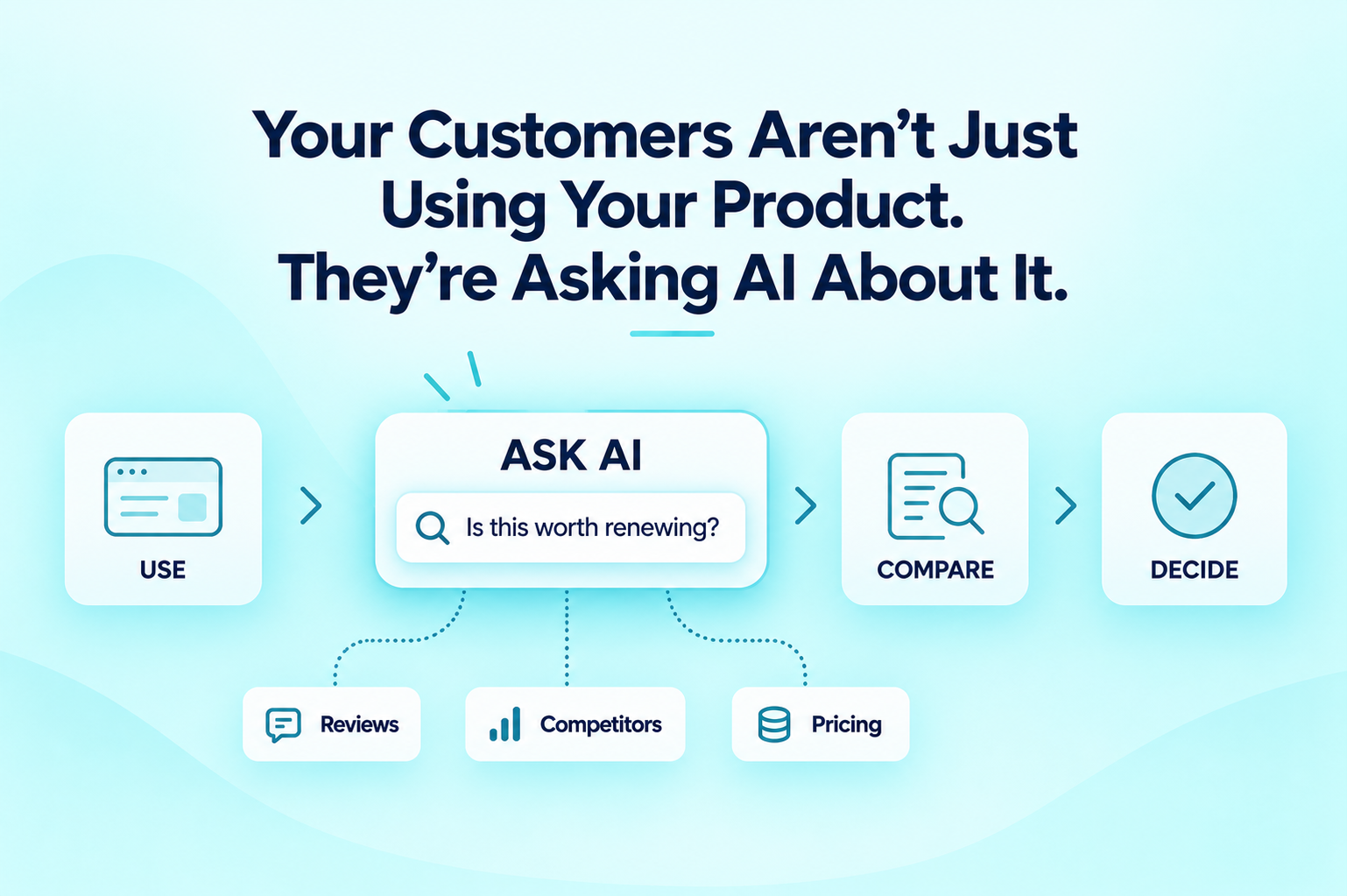
- Use reviews, tickets, and churn history to spot problems
- Give loyal customers real reasons to stay
- Track retention rate, churn, and CLV on a set schedule to refine the approach
What Are the Key Types of Customer Retention Strategies?
Common strategies include better onboarding, personalized communication, proactive support, loyalty programs, feedback loops, win-back campaigns, and targeted incentives; the right mix depends on the customer lifecycle.
How to Keep Customers Loyal?
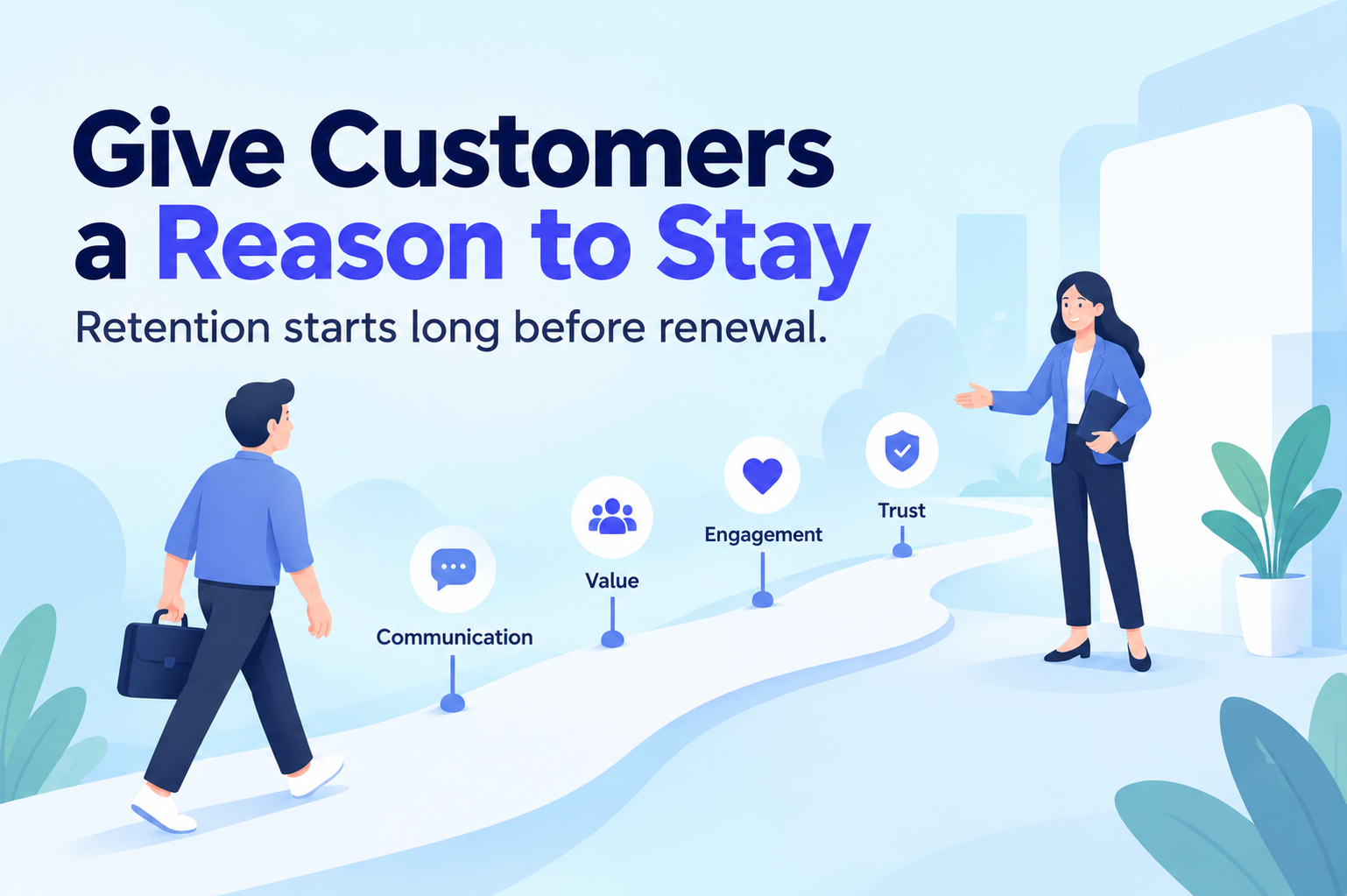
Customers stay loyal when the product keeps solving a real problem, the experience stays easy, and the business gives them reasons to keep engaging. A retention program ties these together: understand what customers need, improve the experience, communicate at the right moments, reward engagement, and step in when engagement drops.
What is a retention program?
A retention program is a set of touchpoints, onboarding, check-ins, loyalty tiers, renewal outreach built to keep a customer engaged across the relationship, not just at the sale. It brings feedback, communication, support, and re-engagement into one coordinated approach:
- How to use customer reviews for retention strategies
A drop in review scores often predicts churn before the numbers do - read for patterns and route complaints to the right team. - Personalize the customer experience
A customer experience strategy that treats every buyer the same misses useful data - segment by purchase history or lifecycle stage, then tailor emails, offers, and support. - Strengthen customer communication and engagement
Customers churn quietly, so regular contact - a product update, a tip, a check-in after a support ticket - keeps the relationship visible. - Reward loyal customers
The clearest lever for customer loyalty retention is tying rewards to real behavior: tiered points for repeat purchases, early access, referral credit. - Re-engage customers before they churn
Customer re-engagement works better before cancellation than after - track usage drop-off and send a specific, useful nudge, not a generic discount code.
How to Measure Customer Loyalty and Retention?
Loyalty and retention are measured through a small set of numbers: retention rate, churn rate, repeat purchase rate, CLV, and Net Promoter Score. Track them together, since each one alone can mislead. Good customer retention measurement pairs that data with customer loyalty measurement tools like surveys, so the numbers explain what customers do and why.
How do you measure success with customer retention strategies?
The table below breaks out the core customer loyalty metrics and customer retention metrics most teams track side by side:
Customer retention measurement only works on a set schedule - a yearly check won't catch a problem in time. Pair customer loyalty metrics with customer retention metrics monthly, and use customer loyalty measurement, like NPS, to see why a trend is moving, not just that it is.
What Challenges Exist When Implementing Customer Retention Strategy?
The main challenges: data spread across disconnected tools, unclear ownership, and short-term pressure to fund acquisition over existing customers, which shows up as:
- Retention data split across a CRM, a support tool, and a billing platform that never sync
- No dedicated retention department, so churn prevention falls between marketing and support
- Budget skewed toward acquisition, since results are easier to show monthly
- Loyalty programs that get funded but never connect to the product data that would make them work
Retention gains take longer to show up than acquisition wins, which is why the work gets deprioritized despite paying off more over time.
Trends in Customer Retention and Loyalty
The clearest trend is a move from generic discounts toward ongoing, relationship-based engagement.
- Bank of America's 2026 BofA Rewards launch dropped its minimum-balance requirement, and more than 3 million clients enrolled within seven weeks.
- Sephora's Beauty Insider reached more than 45 million North American members in 2025, pairing rewards with community features and exclusive experiences.
Other trends include earlier customer re-engagement, using usage drops to reach customers before they churn, and more connected data, bringing support, feedback, and usage together to spot retention risk earlier.
The bigger shift is making retention part of the everyday customer experience, not a last-minute churn prevention effort.
Build a Customer Retention Management Plan With Envizon
Once connected, retention becomes part of the wider customer experience. Envizon helps B2B teams bring customer data, marketing, and customer experience into one coordinated customer relationship strategy.
If those efforts are spread across tools, teams, or campaigns, bringing them into one place makes the next step clearer.
The actions - product, communication, rewards, service - a business uses to keep customers buying instead of losing them to competitors.
Through retention rate, churn rate, repeat purchase rate, CLV, and Net Promoter Score, tracked on a regular schedule.
Keep solving the customer's problem, communicate regularly, personalize the experience, and reward repeat purchases.
The strongest customer loyalty strategies fix the root cause of drop-off, personalize the experience, tie rewards to real behavior, and re-engage customers before they churn.
Measure where customers actually leave, then apply customer retention management to that point instead of a generic, brand-wide campaign.
Retention is measurable, renewals, repeat purchases, subscription length, while loyalty is the emotional reason behind it. A customer can be retained without being loyal.
Loyal customers already trust the brand, so they cost less to sell to, spend more per order, and are more likely to recommend the business to others.
It varies by industry, but most businesses aim for 85-90%+ depending on their sector, product type, and customer lifecycle length.
Monthly is ideal. A yearly check-in won't catch churn risk early enough to act on it.
Not on its own. A loyalty program works best when paired with good product experience, proactive support, and personalized communication, not as a standalone fix.
B2B SaaS GTM strategist and Founder of Envizon. With 18+ years leading marketing across startups like iMocha, Lavelle Networks, CloudCherry, and Hotelogix, she now helps early-stage founders build GTM engines that scale.
About Envizon
Envizon helps early and growth-stage B2B SaaS startups build their go-to-market (GTM) engine, before they hire a full in-house team.We combine Fractional CMO leadership with a full-stack execution team across outbound, inbound, content, AI, paid, and PR.Not an agency. Not just advisory. Envizon acts as your internal GTM partner- bringing strategy, systems, and execution together to help founders scale faster and smarter.
Knowledge Themes
Looking for the best B2B marketing agency alternative?
Envizon combines Fractional CMO leadership with execution across all GTM channels