What Are Customer Acquisition and Retention for Growth?

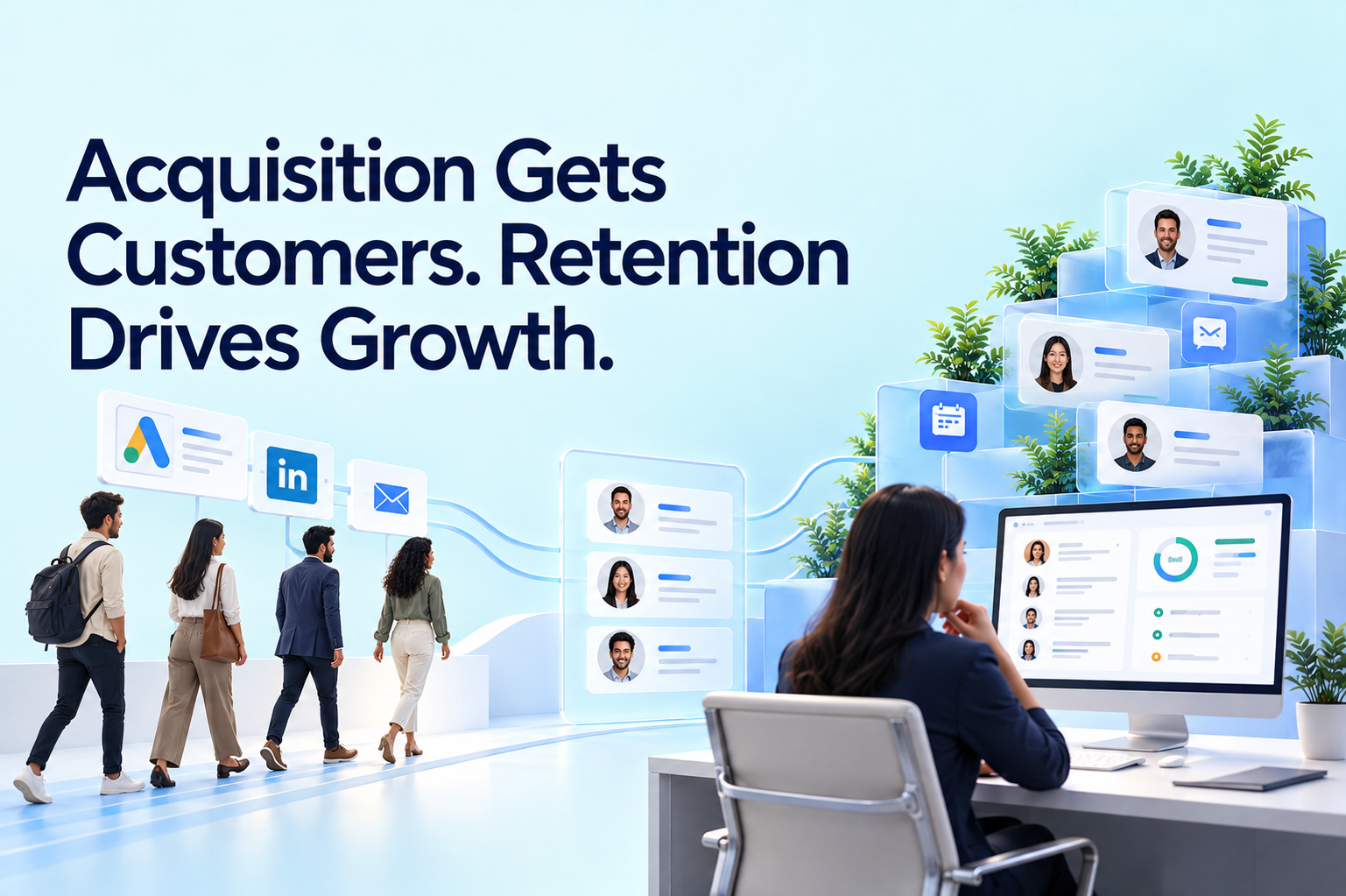
Customer acquisition and customer retention are the two halves of the same growth number: how many customers a business has, and how much each one is worth once they're in. Acquisition fills the funnel. Retention decides how much of that funnel turns into revenue that sticks.
Run acquisition without retention, and customer acquisition cost stops paying back before churn erases the gain. Run retention without acquisition, and growth stalls once the existing customer base stops growing. CAC, retention rate, churn rate, and CLV are how a business measures both sides on the same scale.
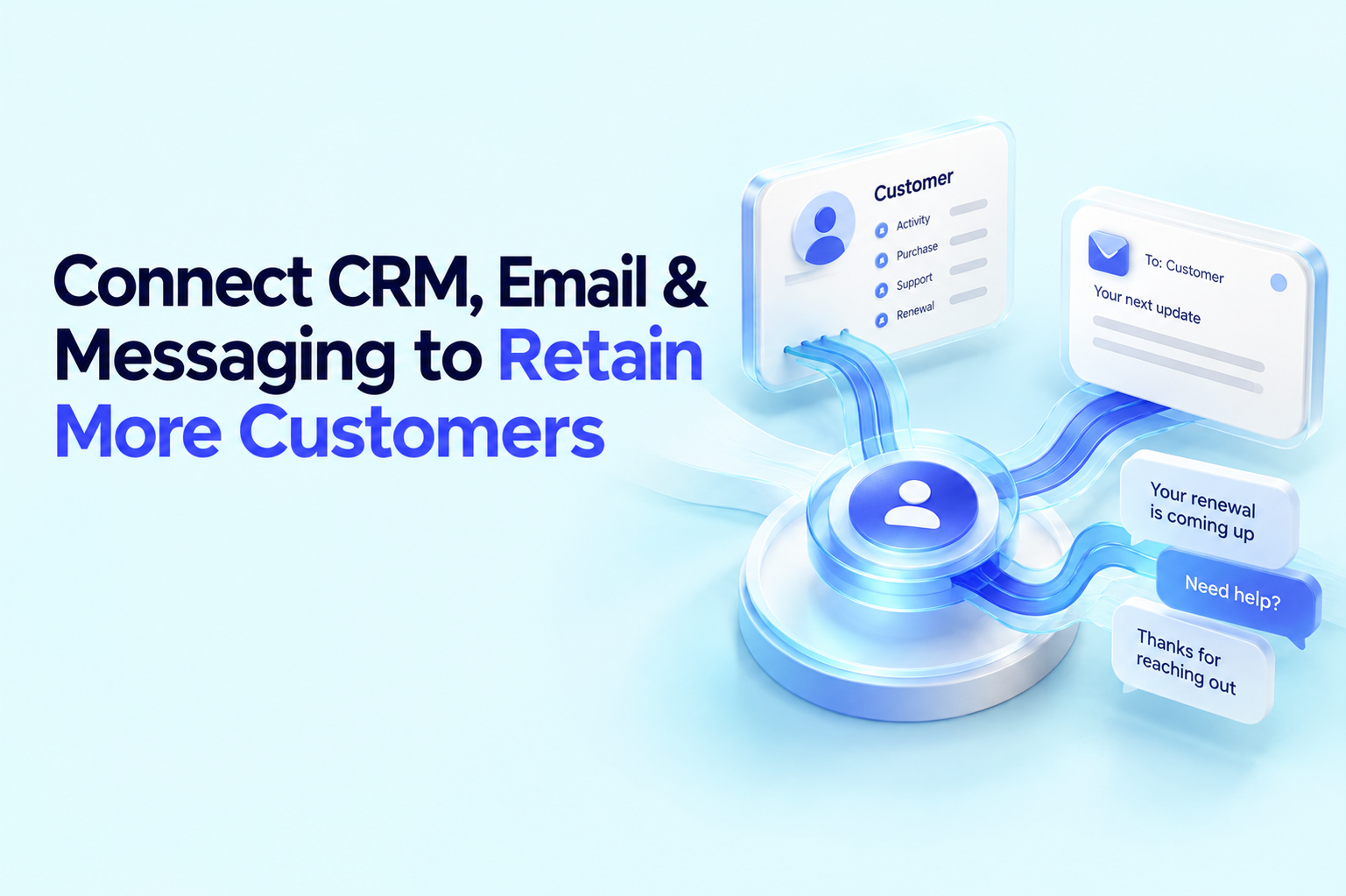
A customer acquisition and retention strategy uses that shared data to decide which customers are worth acquiring, which are worth the extra effort to keep, and where the next dollar of budget creates the most customer profitability.
What Is Customer Acquisition?
Customer acquisition covers everything that turns a stranger into a paying customer: awareness campaigns, lead generation, sales outreach, and the acquisition marketing spend behind each channel. A customer acquisition strategy sets which channels get that spend and which buyers are worth chasing in the first place.
What Is Customer Retention?
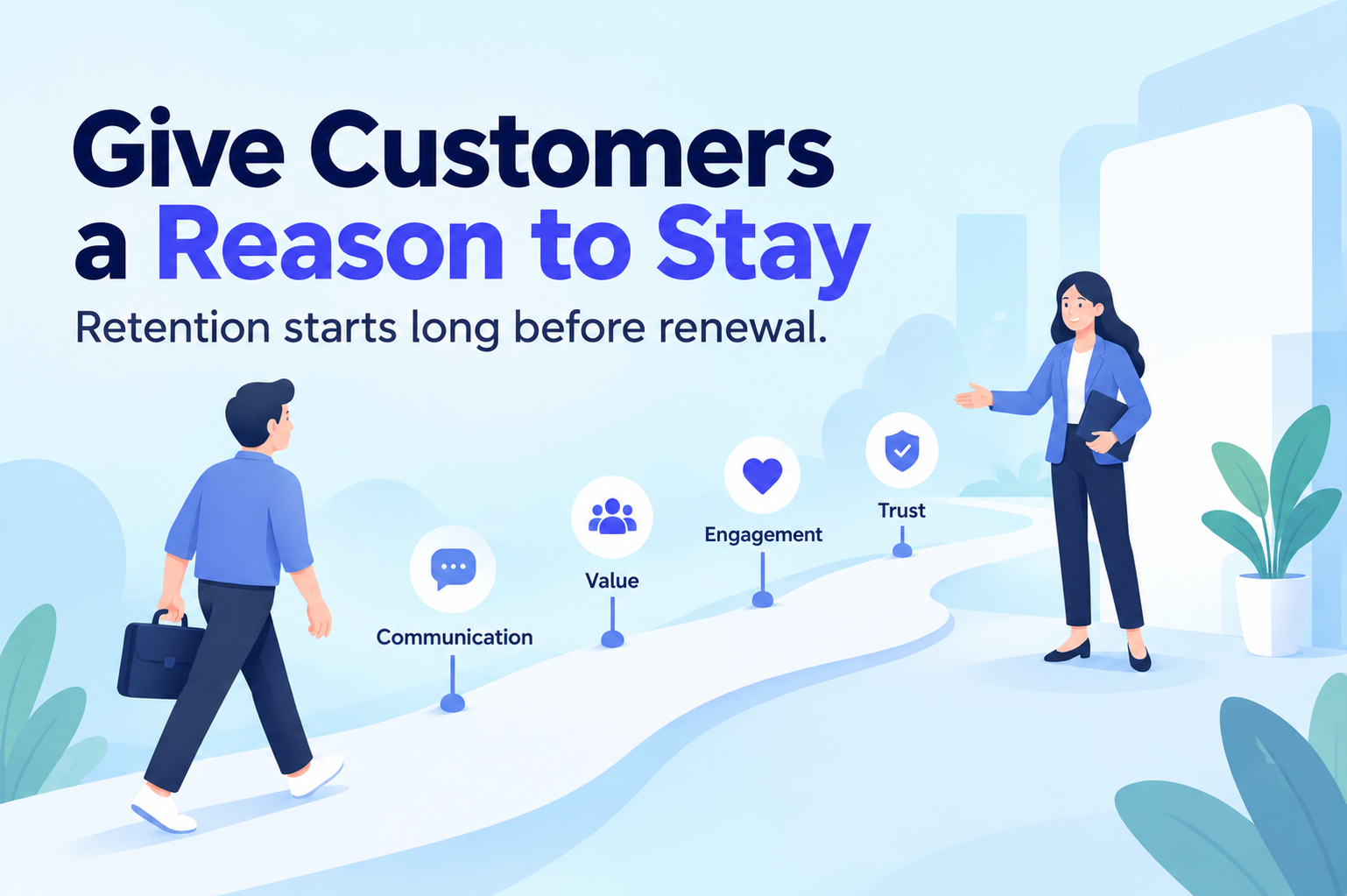
Customer retention is what happens after the sale: onboarding, support, product experience, and the communication that keeps a customer active. A customer retention strategy protects revenue a business already has by lowering customer churn and building customer loyalty across renewal cycles.
Customer Acquisition vs. Customer Retention
Acquisition and retention answer different questions, but they share one input. The same customer data shows a team who is worth acquiring and who is close to churning.
How Can User Acquisition Improve User Retention?
The way a business acquires users shapes whether those users stay, since the targeting, messaging, and expectations set at signup carry straight into the relationship.
- Targeting the right customer fit during acquisition lowers churn, because a poor-fit user won't get value from the product no matter how strong the onboarding is.
- Messaging that promises exactly what the product delivers keeps retention rate higher than messaging built purely to maximize clicks.
- Channel-level data on which sources bring in users with the strongest retention rate lets budget shift toward acquisition marketing that actually pays back, not just marketing that converts.
This matters even more for a B2B customer acquisition strategy, where long sales cycles make early signals about customer fit some of the only retention data available before a deal even closes.
Customer Acquisition Costs vs. Retention Costs: Where Should You Invest?
Retention spend almost always returns more per dollar, but a business still needs enough customer acquisition cost invested to keep growing at all.
How to Decrease Customer Acquisition Cost
To decrease customer acquisition cost, improve the efficiency of every stage between marketing spend and a new customer. Start by identifying where acquisition spend is being wasted, then improve targeting, conversion, and channel efficiency.
- Cut low-quality segments: Review CAC and conversion rates by audience, industry, company size, or customer type. Reduce spend on segments that cost more to acquire without generating comparable CLV or retention.
- Fix conversion leaks: Identify where prospects drop out between the first click and purchase or sign-up. Test landing-page messaging, offers, forms, pricing pages, and calls to action before increasing traffic.
- Reallocate channel spend: Compare each acquisition channel by CAC, conversion rate, retention, and CLV, not leads alone. Shift budget toward channels producing customers who stay and generate sufficient long-term value.
- Build lower-cost acquisition loops: Strengthen referral programs, organic content, partnerships, and customer advocacy so existing customers and owned channels contribute to new customer acquisition.
- How Can Customer Acquisition Cost Improve Business Outcomes?
A lower, well-managed customer acquisition cost shortens the payback period on every new customer, which frees up cash for retention work sooner. It tends to travel with lower customer churn too, since the targeting discipline that lowers CAC usually brings in a better-fit customer in the first place. Managed CAC turns acquisition into a lever that funds the rest of the customer acquisition and retention strategy, instead of a cost that just eats budget.
How to Allocate Budget Between Customer Acquisition and Retention Marketing
Budget allocation should track growth stage, customer base size, CAC, CLV, and churn rate, rather than sit at one fixed split. This is especially true for a B2B customer acquisition strategy, where account values can differ widely across the customer base and a single ratio rarely fits every account.
Increase acquisition spend when CAC is efficient, churn rate is under control, and the customer base is still small relative to the market available.
When Should You Increase Retention Marketing Spend?
Increase retention marketing spend when churn rate climbs, retention rate slips, or CLV per customer starts falling. At that point, new acquisition is filling a bucket with a growing hole in it.
What Is a Customer-Driven Market Strategy?
A customer-driven market strategy uses customer needs and behavior, rather than internal targets, to shape acquisition, product, and retention decisions.
Instead of building a campaign or product first, teams start with what customers already do: what they search for, what makes them buy, and what causes them to leave. That data feeds the customer acquisition strategy and the customer retention strategy at the same time, which is what keeps the two moving in the same direction instead of chasing separate targets.
Is Customer Retention Better Than Customer Acquisition?
Retention usually has stronger unit economics, but a business can't grow on retention alone.
A retained customer costs less to keep than a new one costs to win, and a rising retention rate does more for CLV than most acquisition campaigns. Retained customers also tend to build more customer loyalty over time, which is part of why a strong customer retention strategy can outperform acquisition spend on a pure return basis. That's a different claim from saying customer retention matters more than customer acquisition overall. Without new customers, there's no base to retain, and a slowing acquisition rate eventually shows up in revenue no matter how well retention performs. The more useful question isn't which one wins. It's whether the budget is balancing acquisition and retention resources to maximize customer profitability, since both sides feed the same number.
How to Build a Customer Acquisition and Retention Strategy for Profitable Growth
A working customer acquisition and retention strategy tracks CAC, CLV, churn rate, and retention rate on one dashboard, and moves budget based on what those numbers show.
- Set a target CLV-to-CAC ratio before spending on either acquisition or retention.
- Track churn rate and retention rate by cohort, not just company-wide.
- Feed acquisition targeting data into onboarding and retention marketing.
- Revisit the acquisition-to-retention budget split every quarter as growth stage changes.
For an agency running client acquisition and retention across several accounts, the same four steps apply per account rather than once at the company level. The same logic holds whether the language used is customer acquisition and retention or user acquisition and user retention. Both come down to the same discipline: know what it costs to win someone, know what they're worth once kept, and let those two numbers decide the budget instead of habit or department politics.
How Envizon Can Help With Your Customer Acquisition and Retention Strategy
Balancing acquisition and retention takes more than knowing the right metrics. It takes a team that can act on CAC, churn rate, and retention rate data every week, not just report on it quarterly. Envizon works with B2B businesses to build and run a customer acquisition and retention strategy that ties both sides to the same numbers, from targeting and messaging on the acquisition side to onboarding and retention marketing on the other. If your acquisition and retention budgets are still working against each other, get in touch with Envizon to talk through where your CAC, CLV, and churn rate stand today.
Customer acquisition focuses on winning new customers, while customer retention focuses on keeping existing customers engaged and buying over time.
Acquisition brings new customers into the business, while retention helps turn those customers into longer-term sources of revenue, loyalty, and CLV.
Businesses can reduce customer acquisition cost by targeting the right customers, improving conversion rates, and investing in acquisition marketing channels that consistently bring in valuable customers.
A stronger customer acquisition strategy can improve retention by targeting customers who are a better fit for the product and setting clearer expectations before the sale.
A customer retention strategy can focus on better onboarding, customer support, product engagement, and retention marketing to reduce customer churn and improve the retention rate.
Businesses can balance both by looking at the cost of acquiring customers alongside their long-term value, then adjusting acquisition and retention resources as the business, customer base, and growth goals change.
B2B SaaS GTM strategist and Founder of Envizon. With 18+ years leading marketing across startups like iMocha, Lavelle Networks, CloudCherry, and Hotelogix, she now helps early-stage founders build GTM engines that scale.
About Envizon
Envizon helps early and growth-stage B2B SaaS startups build their go-to-market (GTM) engine, before they hire a full in-house team.We combine Fractional CMO leadership with a full-stack execution team across outbound, inbound, content, AI, paid, and PR.Not an agency. Not just advisory. Envizon acts as your internal GTM partner- bringing strategy, systems, and execution together to help founders scale faster and smarter.
Knowledge Themes
Looking for the best B2B marketing agency alternative?
Envizon combines Fractional CMO leadership with execution across all GTM channels